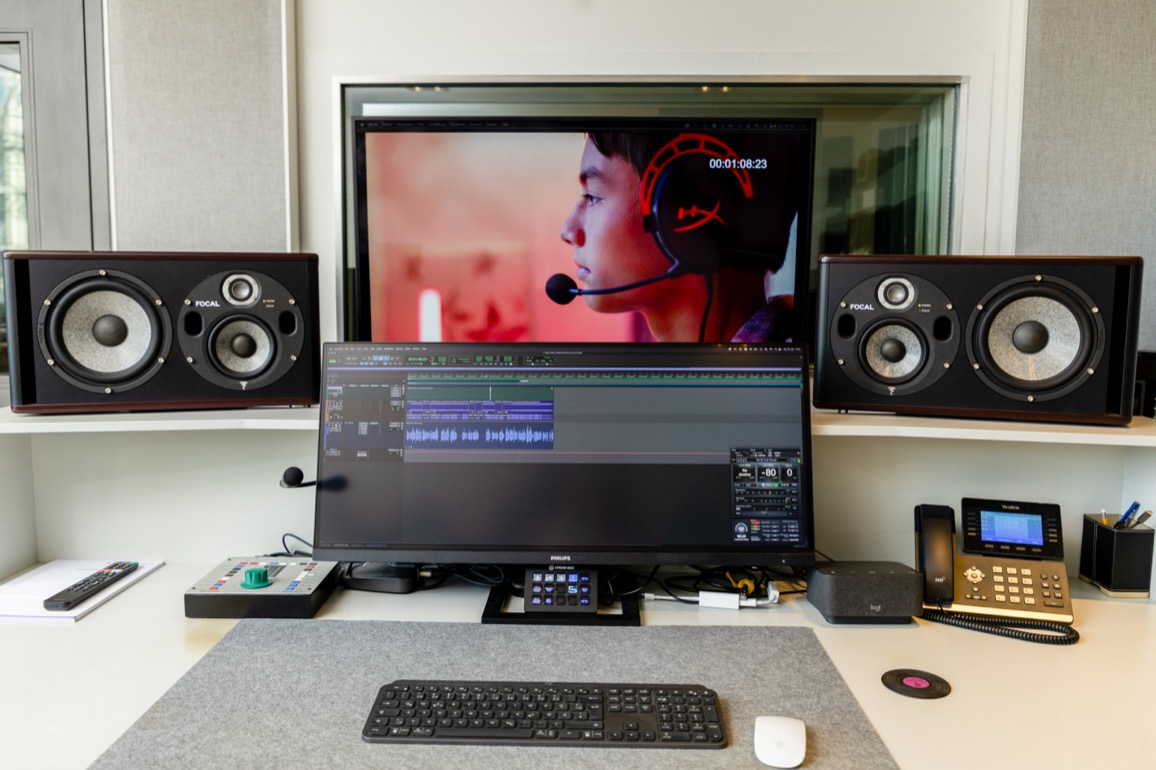
The right voice
The voice conveys the message. It is therefore important to know: Who should address whom and how?
Who = the speaker's attitude
How = the tonality, e.g. an explanatory or a sales pitch
Who = the target group
The clearer the briefing, the more efficient the production and better for the budget.
"Please don't be so promotional, more likeable and friendly" is something we often hear, but we never really know what the customer wants.
We find the right voice talent for every project. An unsuitable voice or poor voice talent can ruin your work. With the right voice, your project will be a success.
How do I find the right voice talent and how do I make a successful voice recording? Here are all the tips you need:
- Selection of voice talent
- Who is speaking?
- How should we speak?
- Who should your project appeal to?
- The casting
- One or more voice talent?
- Which languages
- Prominent voices
- Dubbing or synchronous
- Briefing & direction
- file format



We - the VOX-OVER team - have successfully managed large and small projects (over 2000 of them) for many customers in recent years and have found suitable solutions for all tasks and questions. We are happy to be there for you too!
Trevor Hurst & Markus Löhr
Our promise:
- Personal support for your projects
- Guaranteed quality according to EBU standard (European Braodcast Union)
- 100% native speakers, voice talent TV and radio quality
- Timely implementation
- Trust through NDAs with suppliers
- Legally compliant usage rights and licensing
- Archiving and problem-free continuation of all projects
The selection of voice talent
The choice depends on many factors, such as the genre. An anthemic image film sounds different from a cool explanatory video; factual e-learning and training programs sound different from an inspiring commercial. That's why you need to clarify first:
Who is speaking?
What character should the voice talent narrator portray? An authentic person talking to friends, an announcer passing on important information, a salesperson enthusiastic about a product, someone guiding you through a training course, or a narrator taking you on a journey? Perhaps you have an audio sample that already hits exactly the right tone.
How should we speak?
If something is to be explained, it is usually spoken in a friendly, matter-of-fact tone. If something is to be sold or a new product is to be advertised, the tone is more offensive and more "Hollywood". Think about which tone best suits your project. If in doubt, we will develop the tone of voice together.
Who should your project appeal to?
Who is the target group? Employees who are being trained, end customers who are to buy something, business people or parents, a young audience or senior citizens? In what situation will the voice be heard? At the computer in the office or in the home office, at a large trade fair, on the radio, television or at the movies?
The casting
Describe your project to us in as much detail as possible—this will enable us to find the voice talent who are the best fit. We will then send you a preselection of voices—the casting.
Finding it difficult to decide? Then we will organize a spot casting: one or more voice talent will record a short section of your text. This will allow you to hear what the result might sound like before recording.
One or more voice talent?
If your project involves multiple roles, you can record a separate voice talent for each role. Alternatively, we can have one voice talent speak all the roles: some can adapt their voice perfectly to the roles. However, not every voice talent is equally good at this.
Which languages?
If your project is international, we recommend working exclusively with native speakers. These native speakers enable 100% acceptance in the respective countries. More on this soon in an extra chapter.
Prominent voices
"That's Robert de Niro!" / "That's the prosecutor from the Münster crime scene!" Voices of well-known actors or popular dubbing actors can give projects special attention. The recognizability of celebrity voices can pay off. Almost every wish can be fulfilled, provided the budget allows it.
Dubbing or synchronous
During synchronization, the original text is replaced by the target language in a lip-synchronized manner. During dubbing, the original text is spoken over, so you hear both the original voice (in the background) and the newly recorded one. This is much less time-consuming and therefore cheaper.
Tip: From local radio commercials to international cinema spots, from simple e-learning to bombastic image films, every project can be produced to a high standard of quality.
Caution: An unprofessional voice talent an inexperienced speaker can ruin your work, while a really good voice talent can make your project even better.
Another tip: If you send us an audio sample of a recording or film, we can understand your requirements more quickly and fulfill them better.
Briefing & direction
Once your ideas and all important questions have been clarified, the voice recording can begin. The clearer the briefing, the better the result.
Would you like to be part of the recording? We'd love for you to come to our recording studio and meet us in person, yeah! Or you can be present at the recording via Zoom, SessionLink or telephone from the office or at home and direct the recording if you wish.
file format
Do you want to process the recording yourself, for example in a film mix, or should we deliver it ready for broadcast? Depending on the application, we can adjust the volume and loudness.
***
The voiceover guide is intended to be a valuable and useful reference work for anyone involved in voice recording.
Do you have any suggestions, additions or criticism? Please send them to us, we look forward to hearing from you!
***